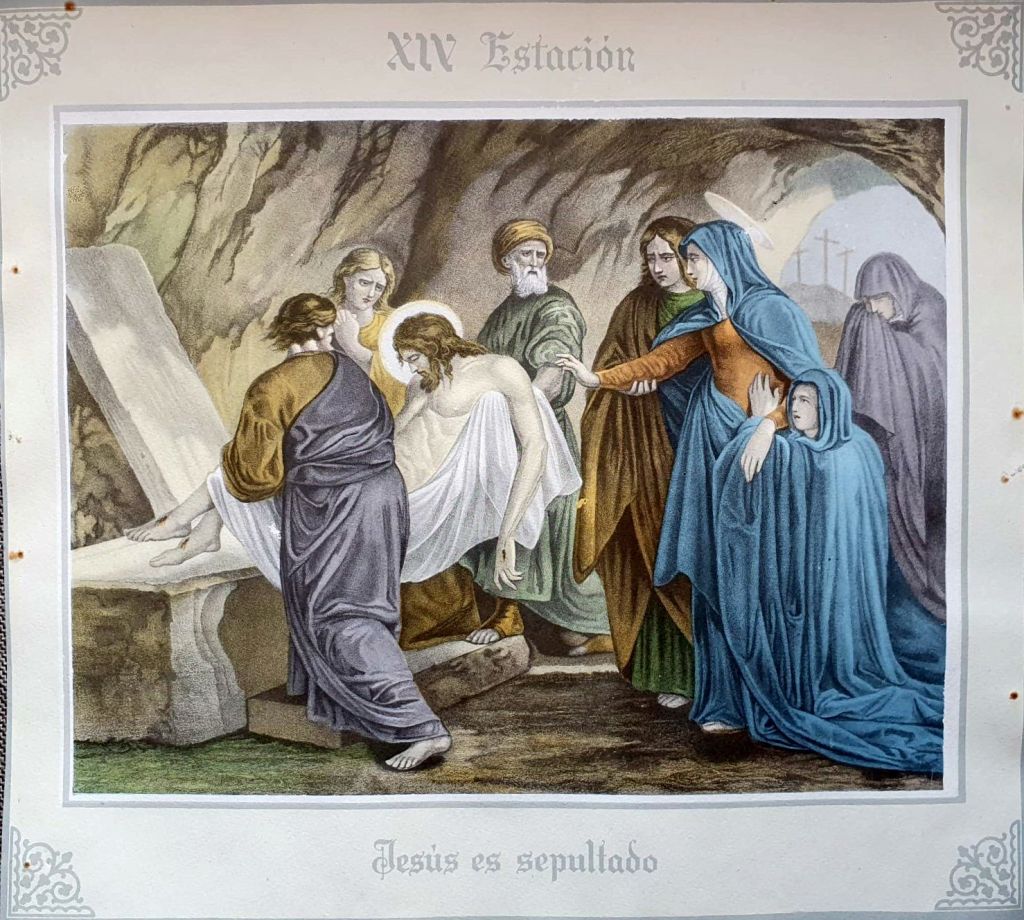
Holy Saturday, the quietest and most mysterious day of the Sacred Triduum, lies between the agony of Good Friday and the glory of Easter Sunday. On this day, Christ lies in the tomb. The world waits. Heaven and earth seem suspended in solemn expectation. Though often overlooked, Holy Saturday plays a vital role in Catholic theology and Western civilization. It represents not only a moment of mourning but also the silent seed of renewal, shaping the Western imagination’s understanding of patience, mystery, and hope in the face of despair.
Descent into Hell: Christ in the Realm of the Dead
One of the most significant theological truths of Holy Saturday is the Harrowing of Hell. According to the Apostles’ Creed, Jesus “descended into hell”—not the hell of the damned, but the realm of the dead, to proclaim victory and liberation to the righteous who awaited salvation. This moment, rich in patristic writings and Church teaching, demonstrates Christ’s total solidarity with humanity, even in death.
St. Cyril of Jerusalem and St. John Chrysostom spoke of this descent as Christ shattering the gates of death and drawing forth Adam and Eve, symbolic of all humanity. In the West, this vision inspired medieval plays, sermons, and iconography depicting Christ breaking down the doors of Hades. The message: no place is untouched by the mercy of God.
Silence, Waiting, and the Christian View of Time
Holy Saturday is a day of silence—a silence that speaks volumes. The Church does not celebrate the Mass until the Easter Vigil. This liturgical stillness teaches the value of waiting in hope, a concept that has deeply shaped the Western spiritual and cultural temperament.
Catholic mystics and monastics developed the virtue of holy waiting—a posture of trust during dark or uncertain times. St. John of the Cross called it the “dark night of the soul,” while Julian of Norwich famously affirmed, “All shall be well,” even in suffering. This quiet confidence became embedded in the Western soul, influencing its literature, spirituality, and psychology.
Holy Saturday encourages a deeper view of time—not as an enemy, but as a vessel of grace. In a modern world of instant gratification, the patience of Holy Saturday reminds Western civilization that the greatest transformations are often born in silence and hiddenness.
Burial and the Sacredness of the Body
The burial of Christ underscores the Catholic belief in the sacredness of the human body, even in death. Christ’s body is laid in the tomb with reverence, wrapped in linen, and watched in mourning. This reverence for the body laid a foundation for Western practices of honoring the dead, from funeral rites to grave architecture.
The Christian understanding that the body is not discarded but awaits resurrection shaped Western views of human dignity, burial customs, and even medical ethics. Saints like St. Joseph of Arimathea, who provided his own tomb for Christ, became models of Christian charity and respect for the dead.
Liminal Space and Cultural Renewal
Holy Saturday occupies a liminal space—a threshold between sorrow and joy, death and life. It is the “in-between” time, when nothing seems to happen outwardly, yet the deepest transformation is taking place. This concept of liminality has deeply impacted the Western understanding of cultural and personal renewal.
Great Western thinkers and writers have often drawn upon the Holy Saturday experience to explore themes of exile, rebirth, and waiting. From Dante’s journey through the Inferno to T.S. Eliot’s Four Quartets, the notion of death preceding renewal echoes the liturgical mystery of this day. The Catholic tradition insists that no moment, however barren, is devoid of God’s redemptive presence.
The Easter Vigil and the Light of the West
The day ends not in despair but in preparation for the Easter Vigil—the most sacred liturgy of the Church’s calendar. It begins in darkness and ends in light, echoing the first creation story and anticipating the new creation in Christ. The fire lit outside the church and the proclamation of the Exsultet represent not only the Resurrection but the renewal of the world.
This imagery profoundly influenced Western symbolism. The idea of light conquering darkness has become central to the Western ethos of hope and rebirth. Enlightenment thinkers, though secularized, inherited this metaphorical framework. The very idea of “progress” and “awakening” owes something to the Christian calendar’s drama of despair giving way to light.
A Quiet Force in Western Civilization
While Holy Thursday and Good Friday capture more attention, Holy Saturday may be the most culturally and spiritually significant in its subtlety. It teaches the power of silence, the sacredness of waiting, and the hope that even death is not the end. It invites the West to rediscover mystery, patience, and the assurance that renewal often begins in the unseen.
As Pope Benedict XVI observed, “Holy Saturday is the day of the ‘death of God,’ a day of the utmost silence. It seems that everything is over; the Church stands, as it were, at the tomb, meditating on the Passion and Death of Christ.” Yet from this silence, the voice of Resurrection will rise.
Holy Saturday’s legacy in Western civilization is quiet but deep: a civilization that knows how to mourn, how to hope, and how to wait for the dawn.
 Learn Western Culture
Leave a comment