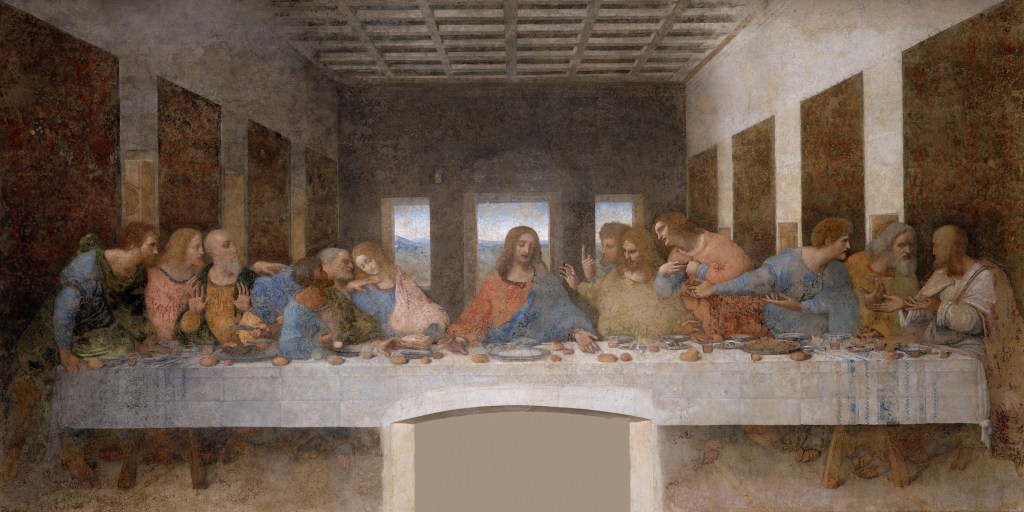
Holy Thursday, the beginning of the Sacred Triduum, marks one of the most profound moments in Christian history—the Last Supper. On this evening, Jesus instituted both the Holy Eucharist and the priesthood, forever intertwining sacrament and service. This sacred event, recorded in the Gospels (Luke 22:14-20; John 13:1-17), has not only shaped Catholic theology and liturgy but also left a deep imprint on Western civilization, influencing concepts of leadership, community, charity, and the dignity of the human person.
The Institution of the Eucharist and the Birth of Christian Worship
At the heart of Holy Thursday is the institution of the Eucharist. When Jesus took bread and wine and declared them His Body and Blood, He gave the Church a perpetual memorial of His sacrifice and an intimate means of communion with God. As the Catechism of the Catholic Church explains, the Eucharist is “the source and summit of the Christian life” (CCC 1324). This gift was not only theological but cultural—it provided the structure for communal worship and the rhythm for Christian life in the West.
The Mass, centered on the Eucharist, became the cornerstone of Western liturgy, shaping sacred music, art, architecture, and timekeeping. Gothic cathedrals were built to house the Blessed Sacrament; Gregorian chant rose in solemn praise around the altar; feasts and fasts developed in relation to the Eucharistic calendar. The very sense of sacred space and sacred time in Western culture finds its source in the liturgical life inaugurated on Holy Thursday.
The Washing of the Feet: Servant Leadership as Cultural Ethic
One of the most radical gestures of Jesus on Holy Thursday was the washing of His disciples’ feet—a task typically reserved for servants. In doing so, Christ redefined authority as service. “If I, your Lord and Teacher, have washed your feet, you also ought to wash one another’s feet” (John 13:14). This act was not merely symbolic but paradigmatic.
Catholic saints and theologians reflected deeply on this gesture. St. Benedict, in his Rule, emphasized humility and mutual service in monastic life, creating a model that would influence European institutions for centuries. St. Thomas Aquinas highlighted this moment as the perfect expression of charity in action. The idea of “servant leadership,” so central to Christian discipleship, also became an enduring principle in Western political and social thought.
From kings who considered themselves “servants of God” to democratic ideals emphasizing leadership for the common good, the ethos of humility and service has influenced everything from governance to humanitarian efforts. Hospitals, orphanages, and charitable institutions—all find inspiration in the image of Christ kneeling to serve.
The Priesthood and the Role of Mediation
Holy Thursday also marks the institution of the ministerial priesthood. Jesus, acting as the Eternal High Priest, offered Himself as both priest and victim, and in doing so, shared this priesthood with His apostles. This sacred vocation became the lifeblood of the Church, with ordained ministers entrusted to consecrate the Eucharist and shepherd the faithful.
The clerical and monastic structures that developed from this foundation had immense influence on the intellectual and cultural development of the West. Monasteries became centers of learning, preservation of classical texts, and innovation in agriculture and education. Priests, acting as spiritual fathers and community leaders, were vital to the development of Western villages, towns, and even early universities.
Community, Memory, and Mission
Holy Thursday reminds the faithful that Christianity is not merely an individual journey but a communal way of life. The Last Supper is not only remembered—it is relived in every Mass, which gathers people around a common table and sends them forth in mission. “Do this in memory of me” (Luke 22:19) is not just a liturgical instruction but a cultural mandate to remember, to embody, and to act.
This emphasis on memory and mission has defined Catholic contributions to Western culture. Catholic education, social teaching, and missionary outreach all trace back to the communal and missionary character born on Holy Thursday. The unity of worship and work, contemplation and action, has influenced institutions from parishes to global charities like Caritas and Catholic Relief Services.
A Timeless Legacy
In Holy Thursday, we see the seeds of a civilization built on communion, compassion, and commitment. The Eucharist became the heart of the Church and the spiritual pulse of the West. The call to servant leadership inspired models of governance, charity, and personal vocation. The priesthood gave rise to a spiritual infrastructure that educated, healed, and guided generations.
As Pope Benedict XVI wrote, “The Eucharist draws us into Jesus’ act of self-oblation… we enter into the very dynamic of His self-giving.” This dynamic has shaped the Western soul—not just in churches, but in art, education, and public service.
Holy Thursday is more than a commemoration; it is the foundation of a living tradition that continues to guide, heal, and inspire Western civilization.
 Learn Western Culture
Leave a comment