Lyric Poetry: The Timeless Voice of Sappho and Pindar in Western Culture
Lyric poetry is one of the most intimate and expressive forms of literature to emerge from Ancient Greece, providing a window into personal emotions, public celebrations, and cultural ideals. The works of poets such as Sappho and Pindar remain foundational to Western culture, influencing literary traditions and artistic expression for centuries. As part of the Ancient and Classical Foundations of literature, lyric poetry continues to shape the way we understand human experience, from love and longing to honor and achievement.
The Role of Lyric Poetry in Ancient and Classical Foundations
Unlike epic poetry, which focused on grand narratives and heroic deeds, lyric poetry was personal, emotional, and often performed with musical accompaniment. Emerging in the Archaic and Classical periods of Greek history, lyric poetry became a defining genre that set the stage for later poetic movements in Western culture.
Sappho: The Voice of Love and Individual Expression
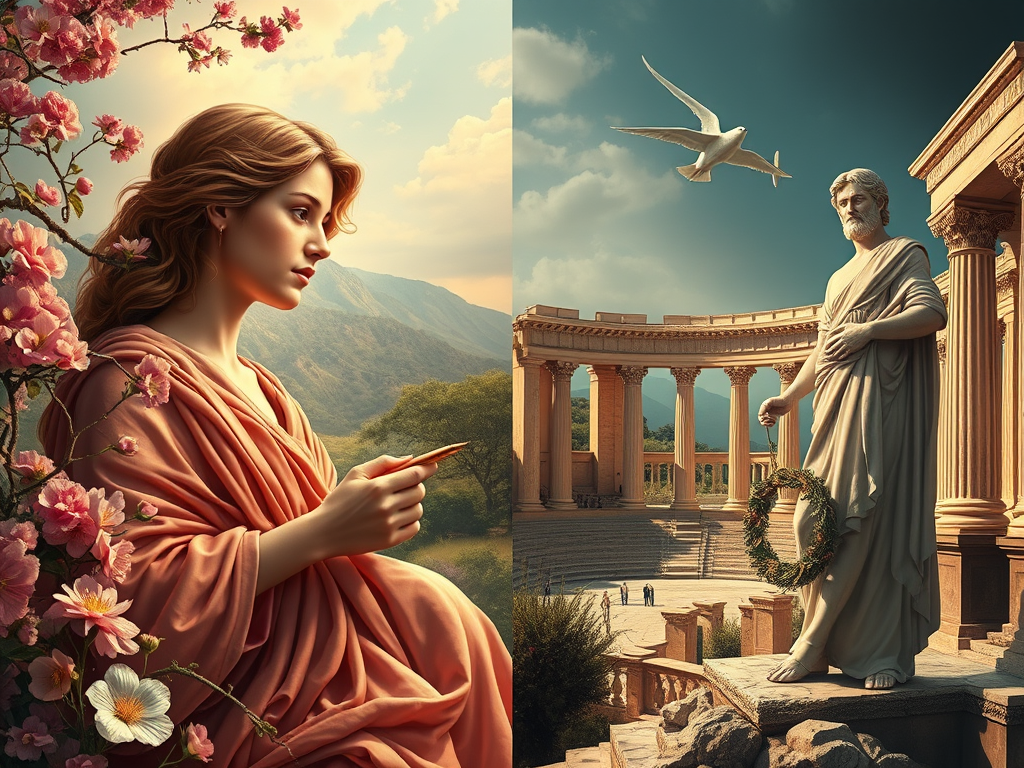
Sappho (c. 630–570 BCE) is one of the most celebrated lyric poets of antiquity, known for her deeply personal and evocative verses. Writing in the first person, her poetry explores themes of love, desire, and beauty, offering a rare female perspective in a literary tradition dominated by male voices. Her fragments, such as the famous Ode to Aphrodite, capture the intensity of human emotion and have influenced poets from the Roman era to the Romantic period and beyond.
Sappho’s lyrical style, characterized by vivid imagery and emotional depth, helped shape the conventions of Western poetry. Her focus on personal experience and individual longing laid the groundwork for later literary movements, including Renaissance love poetry and modern confessional poetry.
Pindar: The Poet of Glory and Public Celebration
While Sappho’s poetry centered on personal emotions, Pindar (c. 518–438 BCE) is best known for his epinician odes, which celebrated athletic victories in the Olympic and other Panhellenic Games. His works, rich in mythological allusions and grand language, honored the achievements of athletes, connecting their successes to divine favor and heroic ideals.
Pindar’s poetry exemplifies the classical Greek values of excellence (areté), honor, and the relationship between mortals and the gods. His influence can be seen in later Western literary traditions, particularly in the celebration of public figures and national pride in poetry and rhetoric.
Why Lyric Poetry Still Matters Today
The themes explored in lyric poetry—love, longing, honor, and identity—are universal and timeless. Sappho’s emotional depth and Pindar’s grandiose praise have inspired countless poets, from the Roman poet Horace to modern lyricists and songwriters. Their works remind us of the power of poetry to capture the full range of human experience, whether in private reflection or public commemoration.
Furthermore, lyric poetry’s emphasis on musicality and rhythm connects it directly to contemporary songwriting and spoken word poetry. The artistic expressions we see in today’s music, poetry slams, and even national anthems owe much to the traditions established by Ancient Greek lyric poets.
Final Thoughts
Lyric poetry is a cornerstone of Western culture, deeply embedded in its literary and artistic traditions. Whether through Sappho’s intimate verses or Pindar’s triumphant odes, this genre continues to influence how we express emotions and celebrate achievements. As we explore the Ancient and Classical Foundations of literature, lyric poetry serves as a testament to the enduring power of words to connect, inspire, and move us across time.
 Learn Western Culture
Leave a comment