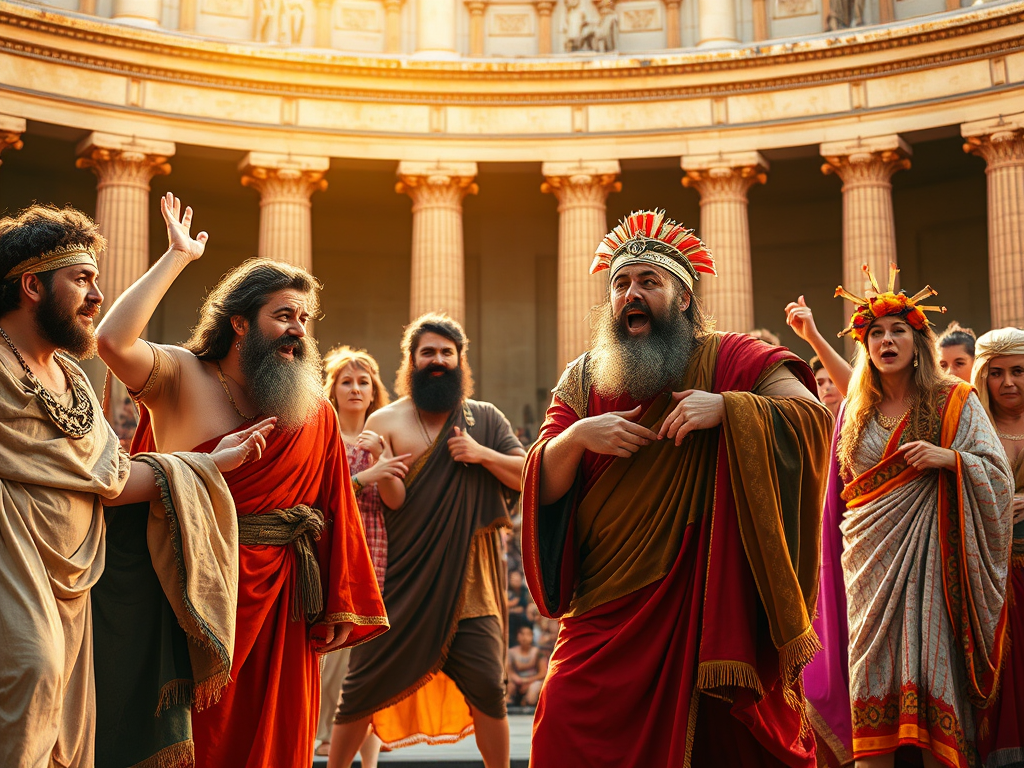
The Legacy of Greek Comedy: How Aristophanes and Plautus Shaped Classical Foundations
Greek comedy remains one of the most enduring contributions of ancient theater, offering insight into politics, society, and human nature. From Aristophanes to Plautus, comedic playwrights crafted stories that entertained audiences while subtly (or not so subtly) critiquing contemporary issues. This legacy continues to influence modern literature, theater, and even political satire.
Greek Comedy and Its Classical Foundations
Greek comedy, a key element of Ancient and Classical Foundations, evolved through two primary phases: Old Comedy and New Comedy. These comedic traditions laid the groundwork for later Roman and even modern comedic forms.
Aristophanes: The Master of Old Comedy
Aristophanes (c. 446–386 BCE) was the most famous playwright of Old Comedy, known for his sharp wit, political satire, and bold social commentary. His plays, such as Lysistrata, The Clouds, and The Frogs, often targeted powerful figures, including philosophers like Socrates and politicians of Athens. He used humor as a tool for criticism, blending fantasy, music, and farcical situations to expose societal flaws.
His work reflects the democratic environment of classical Athens, where free speech was cherished and intellectual debate thrived. Aristophanes’ use of exaggerated characters and absurd scenarios still resonates in modern comedic genres, from political cartoons to sitcoms.
Plautus and the Influence of Greek Comedy on Rome
While Greek comedy began in Athens, its influence extended to Rome, particularly through the works of Plautus (c. 254–184 BCE). He adapted Greek comedic structures and themes, adding a Roman twist to make them accessible to Latin-speaking audiences. His plays, such as Miles Gloriosus and The Menaechmi, emphasized mistaken identities, stock characters, and slapstick humor—tropes still seen in contemporary comedy.
Plautus’ adaptation of Greek New Comedy, which focused on everyday life and romantic entanglements, influenced later theatrical traditions, including Shakespearean comedy and modern farce. His work demonstrates how ancient comedic forms transitioned from Greece to Rome and beyond.
Why Greek Comedy Still Matters Today
The themes of Greek comedy—political corruption, gender roles, social satire—remain relevant in contemporary storytelling. The comedic techniques pioneered by Aristophanes and Plautus continue to shape modern theater, film, and television. From Saturday Night Live to The Simpsons, their influence is evident in the satirical and absurdist humor of today.
Understanding Greek comedy also helps us appreciate the broader Classical Foundations that underpin Western thought, philosophy, and artistic expression. The works of Aristophanes and Plautus serve as both entertainment and historical documents, offering a glimpse into ancient cultures while influencing the evolution of comedy as a genre.
Final Thoughts
Greek comedy is more than just laughter—it is a reflection of the times in which it was created. Whether through the biting satire of Aristophanes or the theatrical humor of Plautus, these plays continue to shape the way we understand humor, society, and the power of storytelling. As we study the Classical Foundations of literature and drama, Greek comedy remains an essential piece of the puzzle, linking ancient traditions to modern artistic expression.
 Learn Western Culture
Leave a comment