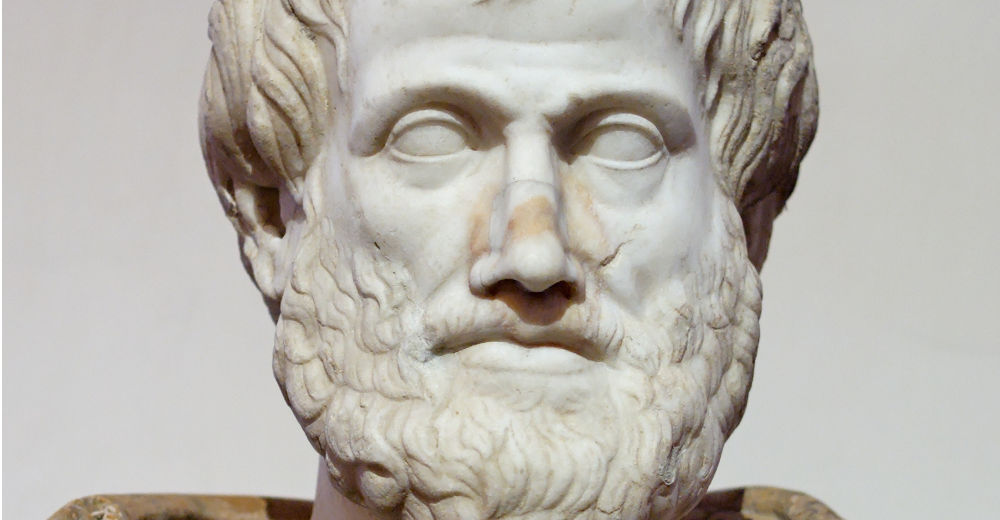
An Overview of Aristotle’s Major Philosophical Works
Aristotle (384–322 BCE) was one of the most influential philosophers in history, shaping fields ranging from metaphysics and ethics to politics and logic. A student of Plato and tutor to Alexander the Great, Aristotle’s works laid the foundation for much of Western philosophy. His writings, many of which were lecture notes, cover nearly every aspect of human knowledge available in his time. Below is an overview of some of his most significant philosophical works.
1. Metaphysics
Aristotle’s Metaphysics is a foundational text in philosophy, exploring the nature of reality, existence, and causality. He introduces the concept of “being qua being” (studying existence in itself) and develops his theory of substance and essence. Aristotle also outlines his famous doctrine of the four causes—material, formal, efficient, and final—which explain why things exist and change.
Understanding Reality: Aristotle’s Metaphysics
In Metaphysics, Aristotle investigates the fundamental nature of reality and existence. He introduces the concept of “being qua being,” the study of existence itself, and lays out his famous doctrine of the four causes:
- Material Cause: What something is made of (e.g., a statue’s marble).
- Formal Cause: The blueprint or essence (e.g., the statue’s shape).
- Efficient Cause: The agent or force that brings it into existence (e.g., the sculptor).
- Final Cause: The purpose or function (e.g., the statue as a tribute).
These ideas remain central to modern metaphysical debates, influencing everything from philosophy of science to discussions on causality in contemporary physics.
Example: Consider a smartphone. Its material cause is metal and glass, its formal cause is its design, its efficient cause is the factory that assembled it, and its final cause is communication and entertainment. Aristotle’s framework helps us understand not just objects but their purpose in a broader sense.
2. Nicomachean Ethics
One of the most well-known works in moral philosophy, Nicomachean Ethics focuses on virtue ethics and the pursuit of the “good life.” Aristotle argues that happiness (eudaimonia) is the ultimate goal of human existence and is achieved through cultivating virtues such as courage, wisdom, and temperance. He introduces the “Golden Mean,” suggesting that moral virtue lies between extremes of excess and deficiency.
The Good Life: Nicomachean Ethics and Virtue Theory
Aristotle’s Nicomachean Ethics explores the ultimate purpose of human life, which he identifies as eudaimonia—often translated as “happiness” or “flourishing.” Unlike fleeting pleasure, eudaimonia is a lifelong pursuit achieved through cultivating virtues such as courage, wisdom, and temperance.
A key idea in this work is the Golden Mean, the balance between excess and deficiency:
- Courage is the mean between recklessness and cowardice.
- Generosity is the mean between wastefulness and stinginess.
Aristotle’s virtue ethics contrasts with modern ethical theories like utilitarianism (which focuses on outcomes) and Kantian ethics (which emphasizes moral rules). Today, virtue ethics influences fields such as business ethics, leadership, and psychology.
Example: A doctor facing an ethical dilemma—balancing empathy with professional detachment—embodies Aristotle’s concept of virtue in action.
3. Politics
In Politics, Aristotle examines different forms of government and the role of the state in achieving the common good. He analyzes monarchy, aristocracy, and democracy, advocating for a balanced constitutional government. Aristotle views humans as naturally political beings (zoon politikon) and emphasizes the importance of civic participation in a just society.
Politics and the Ideal State
In Politics, Aristotle explores the nature of governance and the role of the state in promoting the good life. He classifies governments into three types, each with its ideal form and corrupt counterpart:
| Ideal Form | Corrupt Form |
|---|---|
| Monarchy (rule by one) | Tyranny (oppression) |
| Aristocracy (rule by the best) | Oligarchy (rule by the wealthy) |
| Polity (balanced democracy) | Democracy (mob rule) |
Aristotle favored polity, a mix of democracy and oligarchy, where power is distributed among capable citizens. His ideas continue to influence modern political science, particularly debates on democratic stability and governance.
Example: Aristotle’s concerns about democracy devolving into mob rule resonate in modern discussions about social media’s impact on political decision-making.
4. Poetics
Poetics is Aristotle’s exploration of literary theory, particularly tragedy. He defines key concepts such as mimesis (imitation), catharsis (emotional purification), and the three unities of drama—time, place, and action. Aristotle’s analysis of storytelling and dramatic structure remains influential in literary criticism and theater.
Storytelling and Drama: Poetics
Aristotle’s Poetics is one of the earliest works of literary theory, analyzing the structure of tragedy. He identifies key elements of effective storytelling, including:
- Mimesis (imitation): Art reflects human experience.
- Catharsis (emotional purification): Tragedies evoke pity and fear, leading to emotional release.
- The Three Unities: A well-structured play should maintain unity of time, place, and action.
His principles still influence modern storytelling, from Shakespearean drama to Hollywood screenwriting.
Example: Aristotle’s concept of catharsis explains why audiences find emotional relief after watching a powerful film or play.
5. Prior Analytics & Organon
In Prior Analytics, Aristotle develops formal logic, introducing the syllogism—a logical structure where conclusions follow from premises. This work is part of his Organon, a collection of treatises on logic, reasoning, and argumentation, which laid the groundwork for later developments in deductive reasoning and philosophy of science.
Foundations of Logic: Prior Analytics and the Organon
Aristotle’s Prior Analytics is part of the Organon, a collection of works that laid the foundation for formal logic. He introduces the syllogism, a method of reasoning where a conclusion follows from two premises:
Example of a Syllogism:
- All humans are mortal.
- Socrates is a human.
- Therefore, Socrates is mortal.
This structure became the basis for deductive reasoning, influencing fields from mathematics to computer science.
The Organon as a whole includes:
- Categories (classification of concepts)
- On Interpretation (language and meaning)
- Prior Analytics (syllogistic logic)
- Posterior Analytics (scientific knowledge)
- Topics (dialectical reasoning)
- On Sophistical Refutations (fallacies)
Aristotle’s logic remained largely unchallenged until the 19th century when Gottlob Frege and Bertrand Russell developed modern symbolic logic.
Example: Today, artificial intelligence and programming languages use logical structures derived from Aristotle’s system.
6. De Anima (On the Soul)
Aristotle’s De Anima investigates the nature of the soul, consciousness, and perception. Unlike Plato, who viewed the soul as separate from the body, Aristotle argues that the soul is the form of a living being and cannot exist independently. He categorizes the soul into three types: vegetative (plants), sensitive (animals), and rational (humans), with human rationality being the highest function.
The Nature of the Soul: De Anima (On the Soul)
Unlike Plato, who saw the soul as separate from the body, Aristotle argued that the soul is the form of a living being—it cannot exist independently. He categorized living beings based on their soul functions:
- Vegetative Soul (plants): Growth and nutrition.
- Sensitive Soul (animals): Sensation and movement.
- Rational Soul (humans): Reasoning and intellect.
This work influenced later philosophical and psychological theories on consciousness and the mind-body relationship, shaping discussions in neuroscience and cognitive science.
Example: Modern AI research often revisits Aristotle’s distinction between sensory perception and rational thought when defining machine intelligence.
7. Rhetoric
In Rhetoric, Aristotle examines the art of persuasion, defining three essential appeals: ethos (credibility), pathos (emotion), and logos (logic). His work remains foundational in communication studies, influencing everything from political speeches to modern advertising techniques.
The Art of Persuasion: Rhetoric
In Rhetoric, Aristotle analyzes how persuasion works, breaking it down into three essential appeals:
- Ethos (credibility): A doctor giving medical advice carries more weight than an unqualified person.
- Pathos (emotion): A charity campaign using emotional stories to encourage donations.
- Logos (logic): A well-structured argument supported by facts and statistics.
Aristotle’s insights are still applied today in advertising, political speeches, and legal arguments. His emphasis on logical reasoning laid the foundation for modern debate and communication strategies.
How Aristotle’s Ideas Have Evolved and Been Challenged
While Aristotle’s works remain foundational, many of his ideas have been revised or challenged over time:
- His geocentric model of the universe was disproven by Copernicus and Galileo.
- His biological classifications have been refined by modern genetics.
- His political theories are debated in light of contemporary democracy and human rights.
However, his methods—empirical observation, categorization, and logical reasoning—continue to shape philosophy, science, and ethics. Modern virtue ethics, revived by thinkers like Alasdair MacIntyre, builds upon Aristotle’s moral philosophy, adapting it to contemporary challenges.
Conclusion: Aristotle’s Enduring Legacy
Aristotle’s philosophical works provide timeless insights into reality, ethics, politics, art, and logic. His ability to categorize and analyze the world laid the groundwork for countless disciplines. While some of his ideas have been revised, his intellectual framework remains indispensable in modern thought.
Whether exploring how we should live (Nicomachean Ethics), how we govern (Politics), or how we tell stories (Poetics), Aristotle’s influence is undeniable. His works continue to shape everything from scientific inquiry to leadership ethics, proving that even after 2,000 years, Aristotle remains a guiding light in philosophy.

 Learn Western Culture
Leave a comment