The Oedipus Cycle: A Timeless Exploration of Fate, Free Will, and Tragedy
The Oedipus Cycle, a trilogy of plays by the ancient Greek playwright Sophocles, stands as one of the most profound and enduring works of classical literature. Composed of Oedipus Rex, Oedipus at Colonus, and Antigone, these plays delve into fundamental themes of fate, free will, human suffering, and the limits of human knowledge. Written in the 5th century BCE, Sophocles’ tragedy continues to captivate audiences with its powerful narrative and philosophical depth. The cycle presents a deeply tragic vision of life, where individuals struggle against forces beyond their control, ultimately meeting their predetermined fates despite their best efforts.
In this blog post, we will explore the key themes, characters, and dramatic elements of the Oedipus Cycle, examining why these plays remain relevant to modern audiences.
I. The Structure of the Oedipus Cycle
The Oedipus Cycle consists of three plays, though they were not originally written or performed in chronological order:
- Oedipus Rex (Oedipus the King) – The first play (in terms of narrative chronology) follows King Oedipus as he seeks to uncover the truth behind a plague afflicting Thebes, only to discover his own horrific fate: he has unwittingly killed his father and married his mother.
- Oedipus at Colonus – This play, set years later, follows the now-exiled and blind Oedipus as he seeks sanctuary in the town of Colonus. He ultimately finds redemption before dying and becoming a protector of the land.
- Antigone – The final play focuses on Oedipus’ daughter, Antigone, who defies the new king of Thebes, Creon, in her quest to honor her fallen brother. Her tragic defiance results in her death and the unraveling of Creon’s rule.
Together, these three plays form a tragic cycle, with themes of destiny, divine justice, and human resilience woven throughout.
II. Oedipus Rex: The Unraveling of Fate
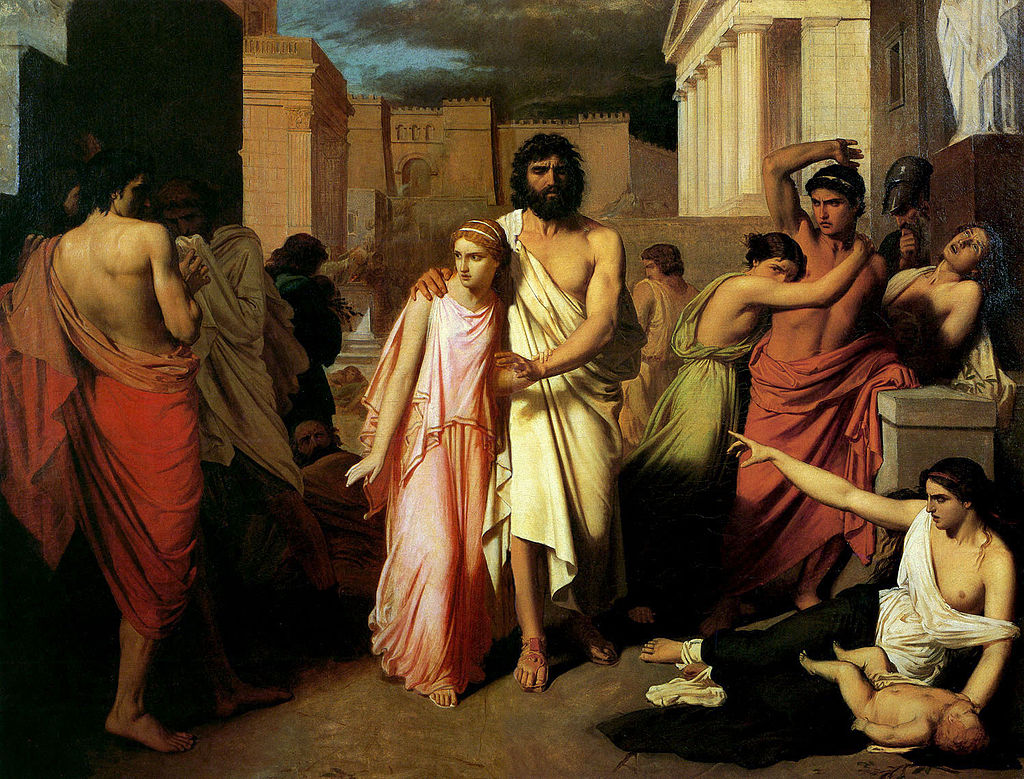
Perhaps the most famous of the three plays, Oedipus Rex is a masterpiece of dramatic irony and tragic inevitability. The play begins with Thebes suffering from a plague, and King Oedipus vows to find the source of the city’s misfortune. The oracle at Delphi reveals that the city will only be cleansed if the murderer of the previous king, Laius, is found and punished. Oedipus, determined to solve the mystery, relentlessly pursues the truth.
“Time, which sees all things, has found you out.”
– Sophocles, Oedipus Rex, line 1213 (trans. Robert Fagles)
As the investigation unfolds, Oedipus slowly pieces together his own tragic past. He was abandoned as a baby because of a prophecy that foretold he would kill his father and marry his mother. Unaware of his true origins, he was raised by the king and queen of Corinth. As a young man, upon hearing the prophecy, he fled Corinth to avoid fulfilling it, only to unknowingly kill his biological father, King Laius, at a crossroads. Later, he became the ruler of Thebes and married Queen Jocasta—his own mother.
The horror of the revelation leads to a catastrophic ending: Jocasta hangs herself, and Oedipus blinds himself with her brooches. He chooses exile, embodying the tragic downfall of a once-great king undone by fate and his own quest for truth.
“How dreadful knowledge of the truth can be when there’s no help in truth!”
– Sophocles, Oedipus Rex, lines 316-317 (trans. Robert Fagles)
Themes of Oedipus Rex
- Fate vs. Free Will – The play explores whether Oedipus could have ever escaped his fate. His attempts to outmaneuver destiny only lead him directly into its grasp.
- The Limits of Human Knowledge – Oedipus, a man of intellect, believes in his ability to uncover the truth, yet he is blind to his own reality.
- Dramatic Irony – The audience knows Oedipus’ fate long before he does, making every step of his investigation painful and ironic.
III. Oedipus at Colonus: Redemption and Legacy
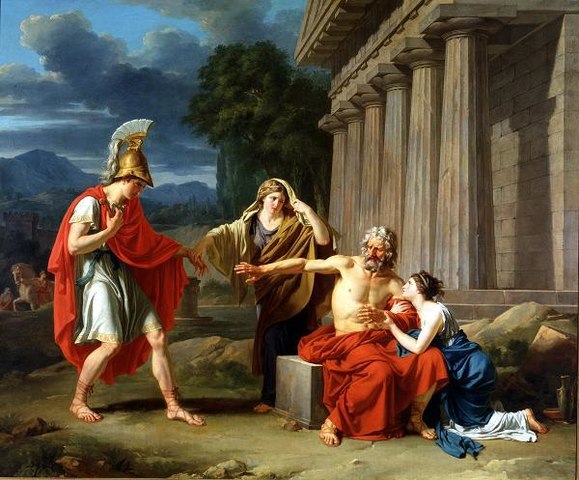
After the devastation of Oedipus Rex, the second play, Oedipus at Colonus, shifts its focus to Oedipus’ final days. Blind and disgraced, Oedipus wanders with his daughter Antigone, searching for a place to die in peace. He arrives at Colonus, a sacred grove near Athens, where he is offered sanctuary.
“Fear? What has a man to do with fear? Chance rules our lives.”
– Sophocles, Oedipus at Colonus, lines 977-978 (trans. Robert Fagles)
Unlike in Oedipus Rex, where fate is a force of doom, Oedipus at Colonus presents fate as a path to redemption. Oedipus, no longer raging against his destiny, accepts his suffering and is granted a peaceful death. His body is buried in a secret location, ensuring that Athens, the city that took him in, will be blessed by his spirit.
Themes of Oedipus at Colonus
- Transformation and Redemption – Oedipus moves from a cursed figure to one whose death brings blessings.
- The Power of the Gods – His journey emphasizes the will of the gods, showing how divine forces continue to shape human destiny.
- The Role of Athens – The play elevates Athens as a city of wisdom and justice, reinforcing its cultural significance in Sophocles’ time.
IV. Antigone: Defiance and Tragic Heroism
The final play, Antigone, follows the struggle of Oedipus’ daughter against the new ruler of Thebes, Creon. After a civil war between Oedipus’ sons, Creon becomes king and decrees that Polynices, who fought against Thebes, must not be given a proper burial. Antigone defies this order, believing it is her divine duty to bury her brother.
“I was born to join in love, not hate—that is my nature.”
– Sophocles, Antigone, line 523 (trans. Robert Fagles)
Her defiance leads to her arrest and eventual death, as Creon refuses to yield. However, his stubbornness brings about his own ruin: his son Haemon (who was engaged to Antigone) kills himself, followed by Creon’s wife, Eurydice. Creon is left utterly broken, a victim of his own rigid rule.
“The only crime is pride.”
– Sophocles, Antigone, line 1023 (trans. Robert Fagles)
Themes of Antigone
- Law vs. Morality – The play explores whether human laws should take precedence over divine laws and individual conscience.
- The Tragic Hero – Antigone and Creon both fit the mold of a tragic hero, but for different reasons. Antigone’s unwavering morality leads to her downfall, while Creon’s hubris causes his loss.
- The Cost of Stubbornness – Creon’s refusal to bend results in his personal destruction, reinforcing the dangers of excessive pride.
V. The Enduring Power of the Oedipus Cycle
The Oedipus Cycle remains deeply relevant because it grapples with universal themes. The plays examine the tension between fate and free will, the burden of knowledge, and the consequences of pride. These themes resonate in modern literature, psychology (Freud’s Oedipus complex), and political discourse.
Sophocles’ tragedies remind us of the fragility of human existence and the inevitability of suffering, yet they also offer glimpses of redemption and resilience. Oedipus’ journey from hubris to acceptance, Antigone’s moral courage, and Creon’s tragic downfall all serve as enduring lessons in human nature.
Conclusion
The Oedipus Cycle is more than just a collection of ancient tragedies; it is a profound exploration of human destiny and ethical struggle. Whether through Oedipus’ relentless search for truth, Antigone’s moral defiance, or Creon’s rigid authority, Sophocles challenges us to confront the limits of our control over our lives. These plays continue to be performed, analyzed, and admired, proving that the questions they raise are as relevant today as they were over two thousand years ago.
In a world still wrestling with questions of fate, justice, and personal responsibility, the tragedies of Sophocles remind us of the enduring power of storytelling to illuminate the human condition.
 Learn Western Culture
Leave a comment