The Iliad: Honor, Fate, and the Rage of Achilles
The Iliad, one of the oldest and most enduring works of Western literature, is more than a tale of war—it is a meditation on honor, fate, and the depths of human emotion. Composed by Homer and passed down through generations, this epic poem continues to captivate readers with its themes and linguistic artistry. At its heart lies the figure of Achilles, whose wrath and struggle for honor drive the narrative forward. Through its structure and poetic devices, the Iliad brings these themes to life in a way that remains powerful even today.
Honor and the Heroic Code
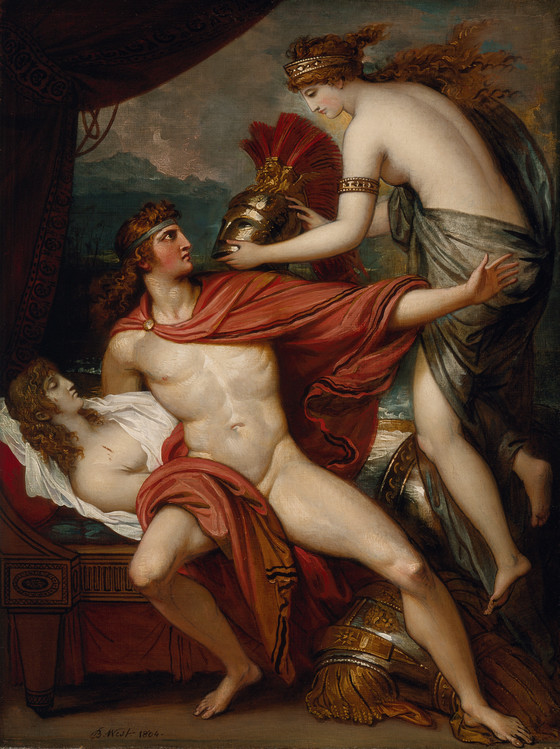
The world of the Iliad is governed by an unyielding heroic code, where honor (timē) is paramount. For Achilles, Agamemnon, Hector, and the other warriors of Troy and Greece, personal glory outweighs even life itself. Achilles’ fury erupts when Agamemnon dishonors him by seizing his prize, Briseis—an insult that wounds his sense of worth more deeply than any spear. His withdrawal from battle is not mere stubbornness; it is a protest against a world where honor is everything. The Iliad shows how this obsession with status and recognition drives men to great deeds but also to destruction.
Achilles learns from his mother what is to come of the war at Troy. Glory and honor can be won on the battlefield, however he must die to achieve this. Or, he may return home to live a quiet existence that no one will remember – especially not millennia after his death. Beckoned by the prospect of glory, he remains at Troy.
“My mother Thetis the silver-footed tells me
that two fates bear me on to the day of death.
If I hold out here and I lay siege to Troy,
my journey home is gone, but my glory never dies.”
— (Iliad, Book 9, lines 499–502)
This passage, in addition to reflecting fate, also embodies the heroic Greek concept of kleos (glory). Achilles recognizes that true honor comes from achieving greatness in battle, even at the cost of his life. It encapsulates the warrior’s ultimate pursuit—immortality through fame.
Fate and the Limits of Human Will
While honor is fiercely pursued, fate (moira) remains inescapable. The Iliad constantly reminds us that no hero, no matter how great, can escape his destined end. Achilles, despite his unmatched prowess, knows that his death is inevitable should he return to battle. Hector, Troy’s greatest defender, also understands that the city is doomed, yet he fights on. The tension between human agency and divine fate pervades the poem, making every act of courage and defiance all the more tragic.
Although the fates may appear to dictate what will happen, Achilles still must choose. He has two paths before him: a long, quiet life or unending glory bought by a violent end. This shows a complex view of the Greeks as to the role we and the gods play in how our lives turn out.
“Two fates bear me on to the day of death.
If I hold out here and I lay siege to Troy,
my journey home is gone, but my glory never dies.
If I voyage back to the fatherland I love,
my pride, my glory dies …
true, but the life that’s left me will be long,
the stroke of death will not come on me quickly.”
— (Iliad, Book 9, lines 499–505)
This quote captures Achilles’ awareness of his fate. He must choose between a long but obscure life or a brief existence filled with eternal glory. It highlights the inevitability of fate and the limited control humans have over their destinies.
The Rage of Achilles: A Force Beyond Control
Achilles’ rage (mēnis), introduced in the very first line of the poem, is unlike any other emotion in the Iliad. It is a force that consumes not only him but those around him. His refusal to fight leads to the death of his closest friend, Patroclus, and in his grief, Achilles unleashes a vengeance that knows no bounds. His desecration of Hector’s body—dragging it behind his chariot for days—demonstrates the terrifying power of unchecked wrath. Yet, in the end, Achilles finds a moment of humanity when he returns Hector’s body to King Priam, showing that even the most wrathful warrior is capable of mercy.
The determining factor in the Iliad is the character failure of Achilles. If not for his rage, he may not meet the end he does in battle. It is this flaw that ultimately sets in motion the chain of events that lead to his death. And, it gives us some amazing scenes of him going berserk in battle.
“Rage—Goddess, sing the rage of Peleus’ son Achilles,
murderous, doomed, that cost the Achaeans countless losses,
hurling down to the House of Death so many sturdy souls,
great fighters’ souls, but made their bodies carrion,
feasts for the dogs and birds,
and the will of Zeus was moving toward its end.”
— (Iliad, Book 1, lines 1–6)
The opening lines of the Iliad set the stage for the entire epic, emphasizing Achilles’ destructive rage. His wrath not only dooms himself but also brings suffering to his comrades, demonstrating the devastating power of unchecked anger.
The Linguistic Power of the Iliad
Homer’s poetic technique enhances these themes, making them resonate deeply. The Iliad was composed in dactylic hexameter, a rhythmic structure that gives the poem a grand and almost musical quality. The use of epithets, such as “swift-footed Achilles” or “Hector, breaker of horses,” reinforces key characteristics, making the heroes larger than life. Homer also employs repetition, similes, and vivid imagery to bring the action and emotion to the forefront.
One of the most striking aspects of the poem is its use of extended similes, often comparing battle scenes to natural forces—rushing rivers, roaring lions, or storms at sea. These comparisons heighten the impact of the violence and the inescapability of fate, reminding readers that human struggles are part of a larger, uncontrollable cosmos.
Furthermore, something that is lost in translation is the meter. Using the Greek epic meter of Dactylic hexameter gives the poem a rhythmic hum. It prods along in a way that is tough for us to recreate, so it is often put into Iambic pentameter – the meter of epic English poets. Although this gives the words a poetic flair as we read them, it loses the feeling of the song that it would have had in Homer’s time. In listening to Spencer Klavan discuss this and read the poem on his podcast Young Heretics, I realized just how much we were missing (even if I didn’t understand what was being said, it was beautiful).
Why the Iliad Still Matters
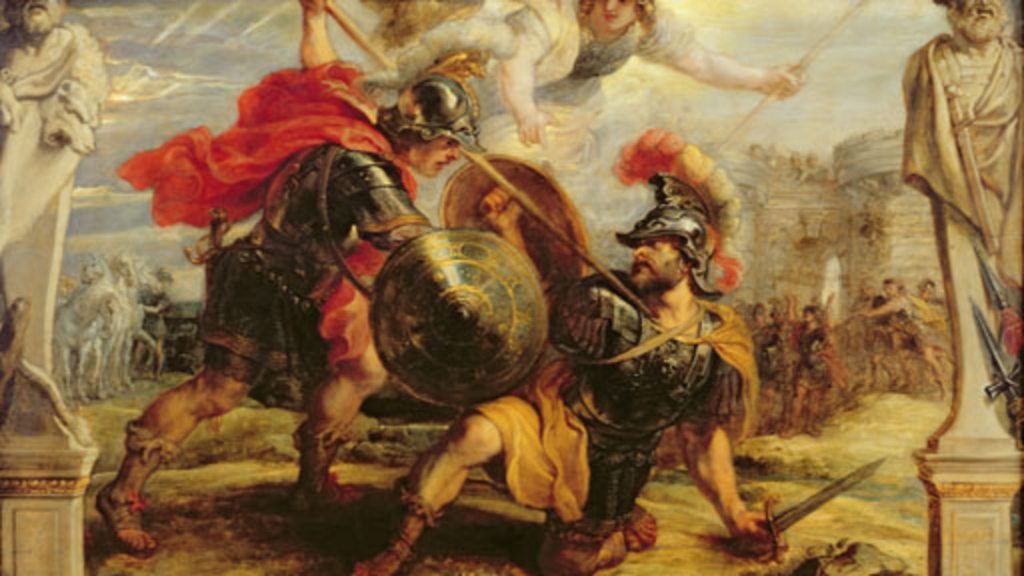
The Iliad is not just a relic of the past; its exploration of honor, fate, and rage remains deeply relevant. It challenges us to consider the costs of pride and vengeance, the fragility of human life, and the pursuit of meaning in a world shaped by forces beyond our control. Achilles’ transformation from an unrelenting warrior to a man who can show compassion teaches us that even in a world of war, there is room for humanity.
For those seeking to understand the foundation of Western literature, the Iliad is essential. Its themes, characters, and linguistic beauty continue to inspire, reminding us that the struggles of Achilles and Hector are, in many ways, our own.
 Learn Western Culture
Leave a comment